


2026年1月21日
Solar Tracker: Boost Solar Energy Efficiency with Smart Orientation Technology
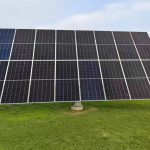
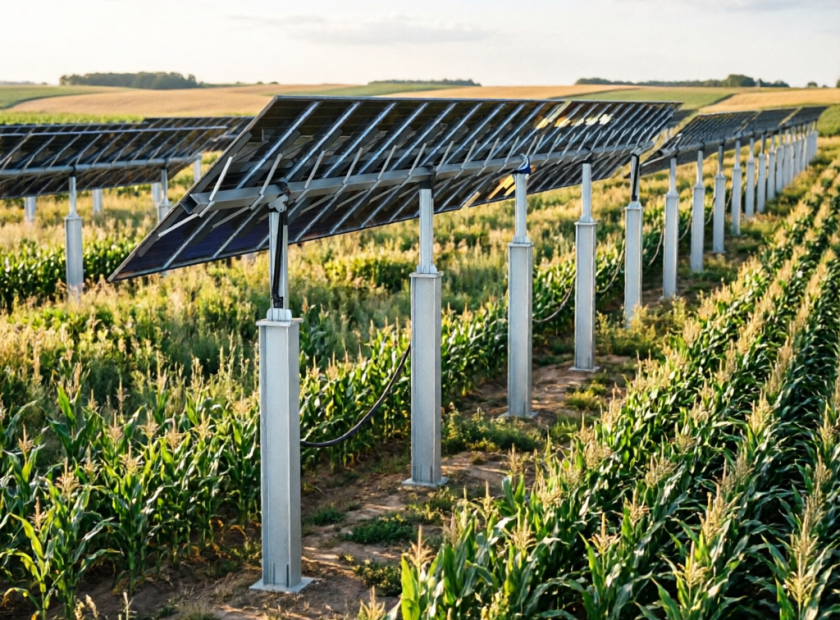
As the global shift to renewable energy accelerates, maximizing the efficiency of solar installations has become a top priority for developers, businesses, and homeowners alike. A solar tracker emerges as a game-changing technology that bridges the gap between fixed solar panels and optimal sunlight capture. Unlike stationary systems that remain in a fixed position, a solar tracker dynamically orients solar panels, parabolic troughs, or reflective mirrors toward the sun, minimizing energy loss and unlocking significant power generation gains.
How Solar Trackers Enhance Energy Production
The core value of a solar tracker lies in reducing the angle of incidence between incoming sunlight and solar panels—a factor known as cosine error. By aligning the panel’s surface with the sun’s path, the system captures more direct solar radiation, which translates to higher energy output. Data shows that single-axis solar trackers can increasepower generation by 15%-25% compared to fixed bracket, while dual-axis models boost efficiency by 30% or more, especially in regions with high seasonal sunlight variation.
Dual-axis solar trackers are particularly effective for small to medium-sized commercial projects, such as business solar power systems and battery charging stations. They adjust for both the sun’s daily east-west movement and annual north-south seasonal shift, maintaining precise alignment year-round. For concentrator photovoltaics (CPV) and concentrated solar power (CSP) applications, solar trackers are indispensable—these systems rely on direct sunlight, and accurate orientation ensures maximum energy collection through optical components.
Technological Innovations Driving Solar Tracker Advancement
Recent years have seen remarkable advancements in solar tracker technology, addressing historical challenges of cost, reliability, and adaptability. AI-powered intelligent tracking systems now integrate real-time weather data, including solar radiation, wind speed, and cloud cover, to adjust panel angles proactively. Equipped with edge computing capabilities and NPU chips, modern solar trackers process 1,000 calculations per second, enabling millisecond response to sudden weather changes like gusts or storms.
Market Growth and Economic Benefits of Solar Trackers
The global solar tracker market has expanded rapidly, reaching 111 GW in 2024—up from 94 GW in 2023 and just 14 GW in 2017. This growth is fueled by policy support, including China’s “dual carbon” goals, the EU’s REPowerEU plan, and U.S. tax credits, which incentivize adoption in utility-scale projects. As costs have dropped—from $1.2 per watt in 2015 to under $0.4 per watt in 2023—the investment payback period has shortened to 4-5 years, making solar trackers economically viable for a wider range of applications.
For a 100MW solar farm, adopting a single-axis solar tracker adds approximately $1.5 million in initial investment but increases annual output by 18 million kWh. At an average electricity price of $0.06 per kWh, this translates to $1.08 million in annual additional revenue, with incremental costs recovered in less than two years. When paired with bifacial solar panels, solar trackers further amplify gains, pushing total energy increases to 25%-40%.
Future Trends: The Next Era of Solar Tracking
The future of solar tracker technology points toward “zero-fault, zero-energy, zero-maintenance” systems. Bionic tracking mechanisms, mimicking sunflowers’ phototropism, aim to cut energy consumption by 50%. Superconducting magnetic bearings will eliminate mechanical friction, extending system lifespans to 30 years. Digital twin technology, already reducing fault location time from 4 hours to 15 minutes, will enable predictive maintenance and real-time performance optimization.
As the world strives for carbon neutrality,solar trackers will remain a critical component of high-efficiency solar installations. Their ability to maximize energy output, reduce carbon footprints, and improve project economics positions them as a cornerstone of the renewable energy transition—for businesses seeking to lower energy costs, developers aiming for higher ROI, and communities committed to sustainable power.