


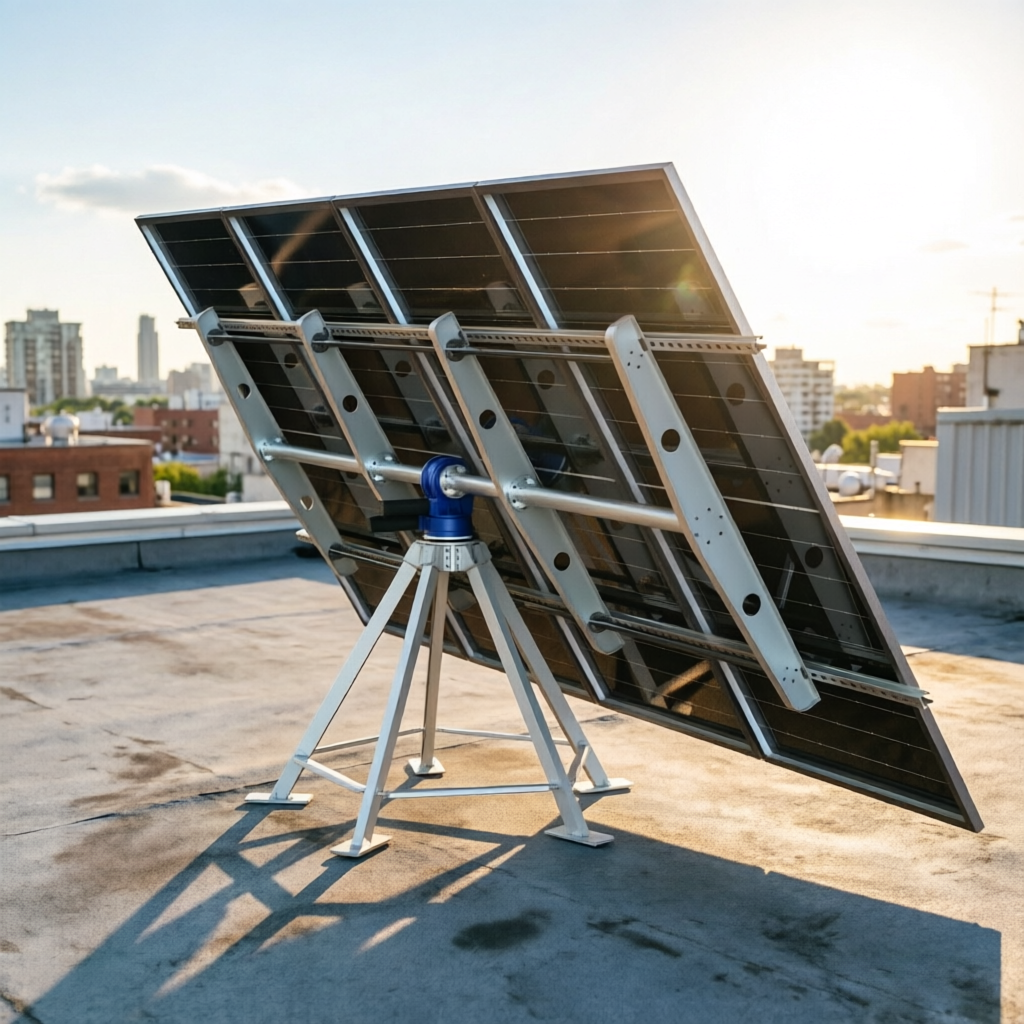
Essential Guide to Choosing a Solar Tracker for Rooftop
Integrating a solar tracker for rooftop applications is one of the most effective ways to maximize energy yield in limited spaces. Unlike fixed-tilt systems, trackers follow the sun’s path, potentially increasing power generation by 15% to 35%. However, installing tracking systems on the rooftop requires careful planning.
- Prioritize Non-Penetrating Designs to Protect Waterproofing
The most significant risk when installing any equipment on a roof is compromising the waterproof layer. Water leakage can lead to severe structural damage and costly repairs.
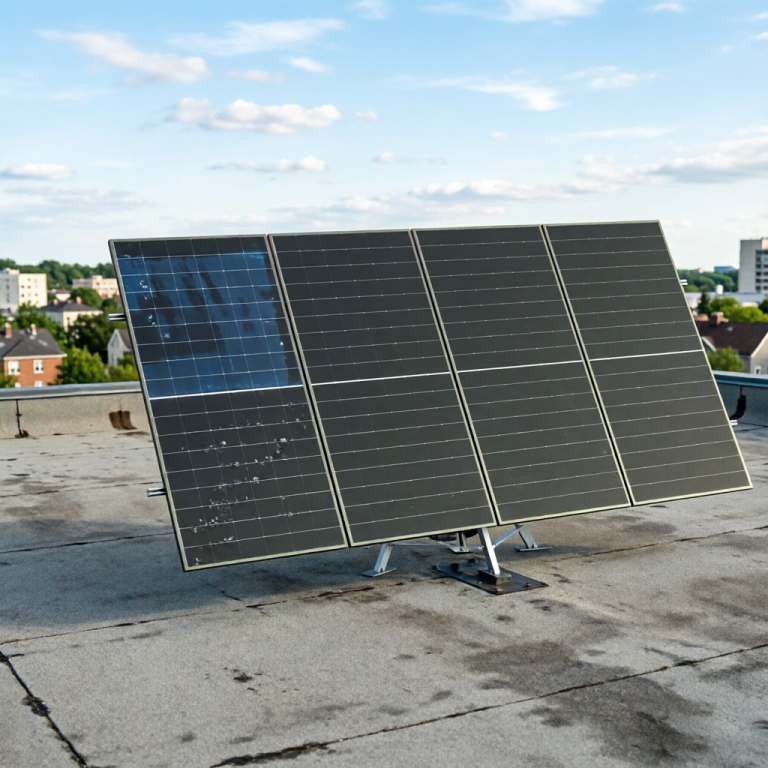
- Non-Penetrating Solutions: Look for a multi-leg design that utilizes weighted bases or specialized clamps rather than drilling through the roof membrane. A high-quality non-penetrating, not damage, waterproof mounting system ensures that the roof’s original integrity remains intact.
- Chemical & Physical Bonding: If penetration is unavoidable due to extreme wind load requirements, professional installers must use high-grade waterproof rubber pads, polyurethane sealants, or butyl rubber gaskets at every anchor point.
- Pre-Installation Check: Before mounting the tracker, inspect the roof for existing cracks or aging. It is best practice to apply a reinforcement layer (such as JS composite waterproof coating) to the installation area beforehand.
- Ensure Easy and Modular Installation
Time is money, especially in commercial projects. A complex installation process increases labor costs and the risk of errors.
- Pre-Assembled Components: Choose a solar tracker for rooftop use that comes with highly pre-assembled rails and brackets. Systems that require no on-site welding or cutting significantly speed up the process.
- Tool-Free or Simple Tool Adjustments: Modern trackers often feature clamp designs that slide into rails easily. This modularity allows for quick adjustments to the tilt angle and spacing without needing heavy machinery.
- Lightweight Materials: utilizing high-strength aluminum alloy (like Al6005-T5) ensures the system is durable yet light enough to be maneuvered easily by a small team on a roof.
- Verify Structural Load and Wind Resistance
A rooftop tracker is a dynamic structure that moves, creating shifting loads that a static roof may not be used to.
- Load Bearing Capacity: Ensure your roof can support the “dead load” (weight of the tracker and panels) and the “live load” (wind and snow). Generally, a roof should support at least 30kg/m², but trackers often require more due to their mechanical bases.
- Wind Load Management: Trackers can act like sails. It is crucial to select a system designed to withstand local wind speeds (e.g., <17m/s). Many smart trackers come with anemometers (wind sensors) that automatically stow the panels in a safe, flat position during storms to reduce wind resistance.
- Electrical Safety and Grounding
Because the system moves, cables are subject to constant stress and environmental exposure.
- Cable Management: Ensure there is enough cable slack to allow for the full range of motion without pulling or tearing the wires. Use UV-resistant, armored cables to prevent degradation from sunlight.
- Robust Grounding: All metal brackets, motor housings, and panel frames must be effectively grounded. The grounding resistance should typically be <4Ω to protect against lightning strikes and electrical surges.
- Inverter Placement: Install the inverter and control boxes in a ventilated, rain-protected area (like under the eaves), ensuring they are not exposed to direct standing water.
- Avoid Shading and Optimize Orientation
Even the best tracker cannot compensate for heavy shading.
- Shadow Analysis: Before installation, analyze the roof for chimneys, vents, or surrounding trees. Ensure the tracker’s movement path will not cause self-shading or hit obstacles.
- Spacing: Maintain adequate spacing between rows of panels (usually 5-10cm for heat dissipation) and ensure the tracker’s rotation radius is clear of parapet walls.
By paying attention to these details—specifically choosing a solar tracker for rooftop that emphasizes easy installation and waterproof protection—you can enjoy higher energy yields without the headache of maintenance or roof damage.