
Maximizing Solar Efficiency: How to Install a Solar Tracker for Slope Roof
Integrating photovoltaic systems into residential and commercial architecture presents unique challenges, especially when dealing with angled surfaces. While fixed-tilt systems are common, they often leave significant energy potential untapped. Installing a solar tracker for slope roof applications allows property owners to overcome geometric limitations, dynamically following the sun’s path to maximize irradiance capture. This guide explores the technical considerations, structural requirements, and installation workflows necessary to successfully deploy these advanced tracking systems on slope rooftops.
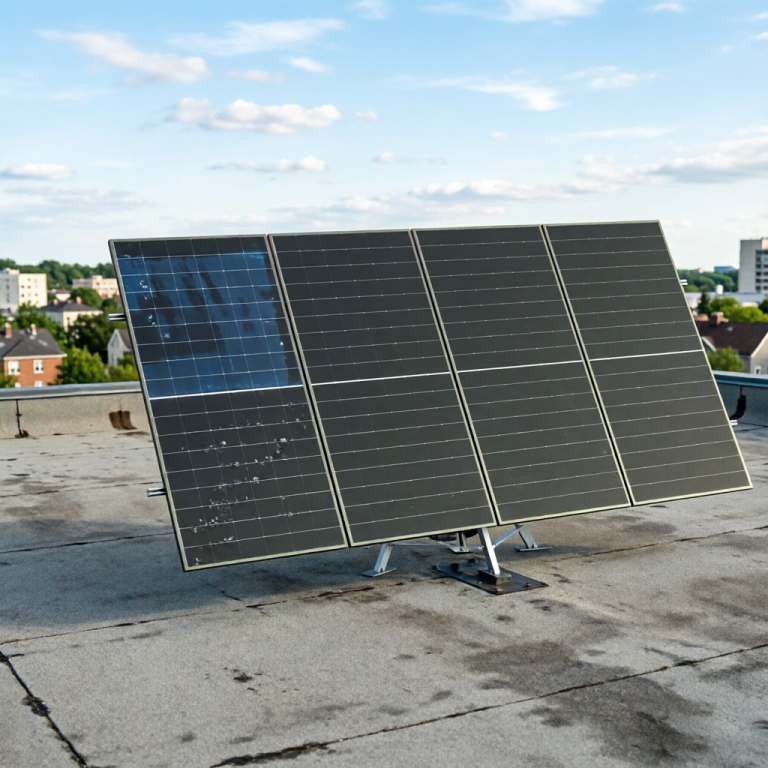
Unlike traditional ground-mounted arrays, a rooftop environment demands precision engineering to account for wind loads and limited space. A single-axis tracker designed for a sloped roof typically operates by adjusting the pitch angle (east to west) to follow the sun’s daily trajectory. Modern iterations, such as those utilizing GPS algorithms, can increase power generation by 15% to 25% compared to static installations.
Before any hardware is mounted, a rigorous evaluation of the building’s integrity is non-negotiable. The dynamic nature of a tracking system introduces variable loads that differ significantly from static dead loads.
- Load-Bearing Capacity: You must verify that the roof’s concrete or steel structure can support the additional weight of the tracker, modules, and ballast. Engineering standards generally recommend that the total load (including wind and snow pressure) should not exceed 80% of the roof’s design capacity.
- Waterproofing Integrity: Penetrating a sloped roof requires meticulous waterproofing strategies. Any drilling for foundation bolts creates potential leak points. It is standard practice to use specialized cutting tools to minimize damage to existing membranes and to apply multi-layer sealing solutions, such as polyurethane sealants or SBS modified asphalt rolls, around mounting feet.
- Shading Analysis: Use drone mapping or solar pathfinders to identify obstructions like chimneys, vents, or nearby trees. Since trackers move throughout the day, shading analysis must account for shadows at various times, not just at solar noon.
The foundation serves as the critical interface between the tracking system and the building. For sloped roofs, the installation process generally follows a “bottom-up” approach to ensure safety and alignment.
- Precision Positioning: Using a total station or high-precision laser level, map out the anchor points according to the design. Deviation should be kept within ±5mm to ensure the smooth rotation of the tracker shaft.
- Anchor Installation: Depending on the roof type, install chemical anchors or pre-buried steel plates. For concrete roofs, ensure the implantation depth meets the pull-out force requirements (typically ≥20kN).
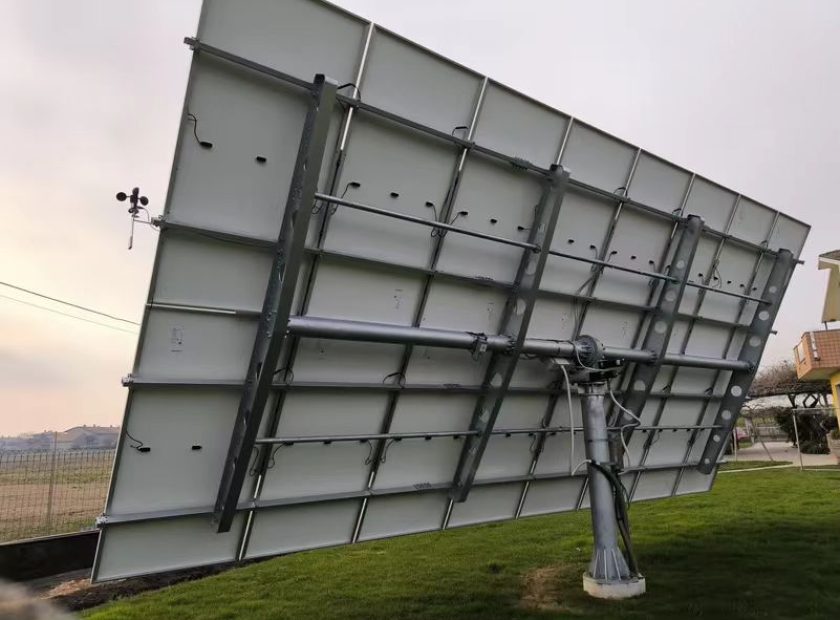
- Bracket Assembly: Assemble the main torque tubes and purlins. If using a single-axis tracker, pay close attention to the parallelism of the drive shafts. Misalignment here can cause mechanical wear and reduce the lifespan of the motor and gearbox.
Once the mechanical structure is secure, the focus shifts to the electrical backbone that powers the tracking logic.
- Cable Management: Because the array moves, cable management is vital. Use flexible cables with high fatigue resistance and ensure there is enough slack in the loops to accommodate the full range of motion without tension. All wiring should be conduit-protected to prevent UV degradation.
- Grounding and Safety: Connect the entire metallic structure to the building’s lightning protection system. The grounding resistance should ideally be ≤4Ω to protect sensitive electronic components from surges.
- System Calibration: Power up the control unit and sync it with the GPS module. Run a self-diagnostic test to confirm that the tracker moves smoothly from its morning stow position to its evening stow position. Modern controllers allow for “backtracking” adjustments to prevent row-to-row shading during early mornings and late afternoons.
Installing a solar tracker for slope roof projects is a sophisticated endeavor that blends civil engineering with smart technology. By strictly adhering to structural safety protocols and leveraging precise installation techniques, homeowners and businesses can transform underutilized roof space into a high-yield energy asset. As tracking technology becomes more modular and lightweight, it stands as a premier solution for those seeking to optimize their renewable energy investment in constrained spaces.