


Solar Trackers for Farms: Let’s Talk About Making Your Land Work Double Time
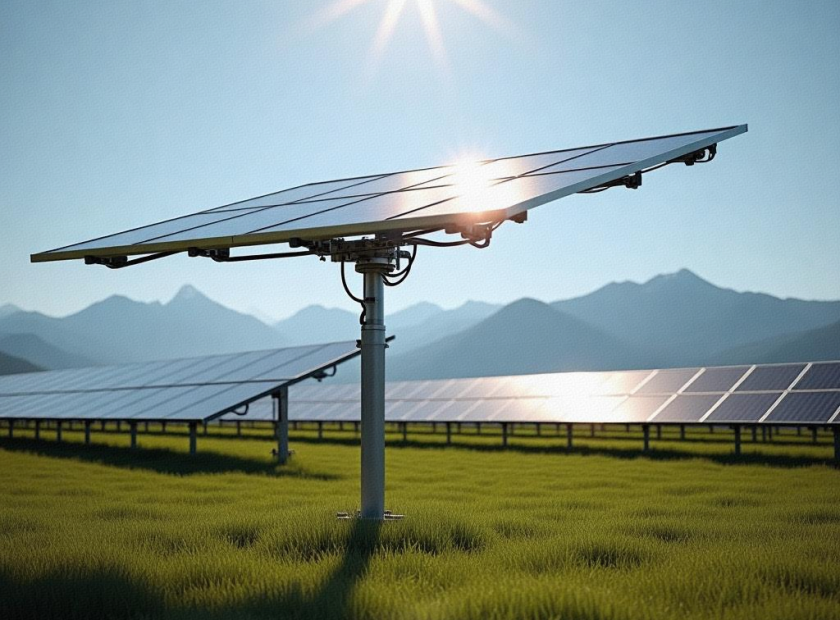
So, everyone’s talking about agrivoltaics these days. Basically, it’s the idea of growing crops and generating solar power on the same piece of land. It sounds great, right? But if you’ve ever looked into it, you know that slapping regular solar panels in a field is a recipe for disaster. You need a specific kind of gear—a proper solar tracker for agriculture—that actually plays nice with your farming routine.
If you want to make money from the sun without tripping over your tractors, here’s the lowdown on what makes these agricultural trackers different (and why they’re worth a look).
Why Regular Solar Trackers Just Don’t Cut It on a Farm
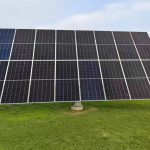
Standard solar trackers have one job: chase the sun to get maximum power. They usually sit pretty low to the ground, which is fine for an empty field but terrible if you’re trying to drive a combine harvester through it. A real agricultural tracker needs to handle three big things: letting your heavy machinery pass underneath, giving your crops enough light when they need it, and not falling over when a storm hits.
What Makes a Good Agricultural Tracker?
To make this whole “farming + solar” thing work, the hardware has to be built for the job. Here are the three features you really need to look out for:
- Plenty of Height So You Can Actually Drive Underneath
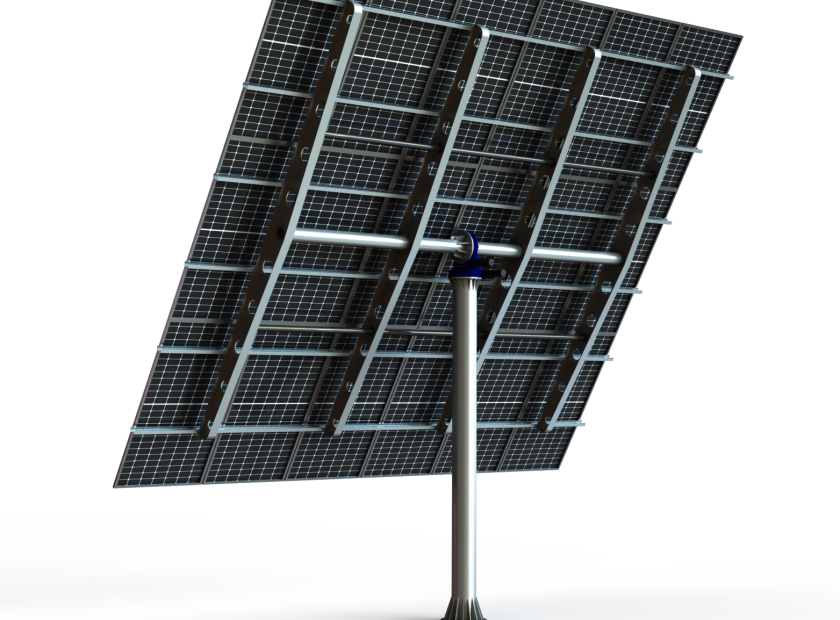
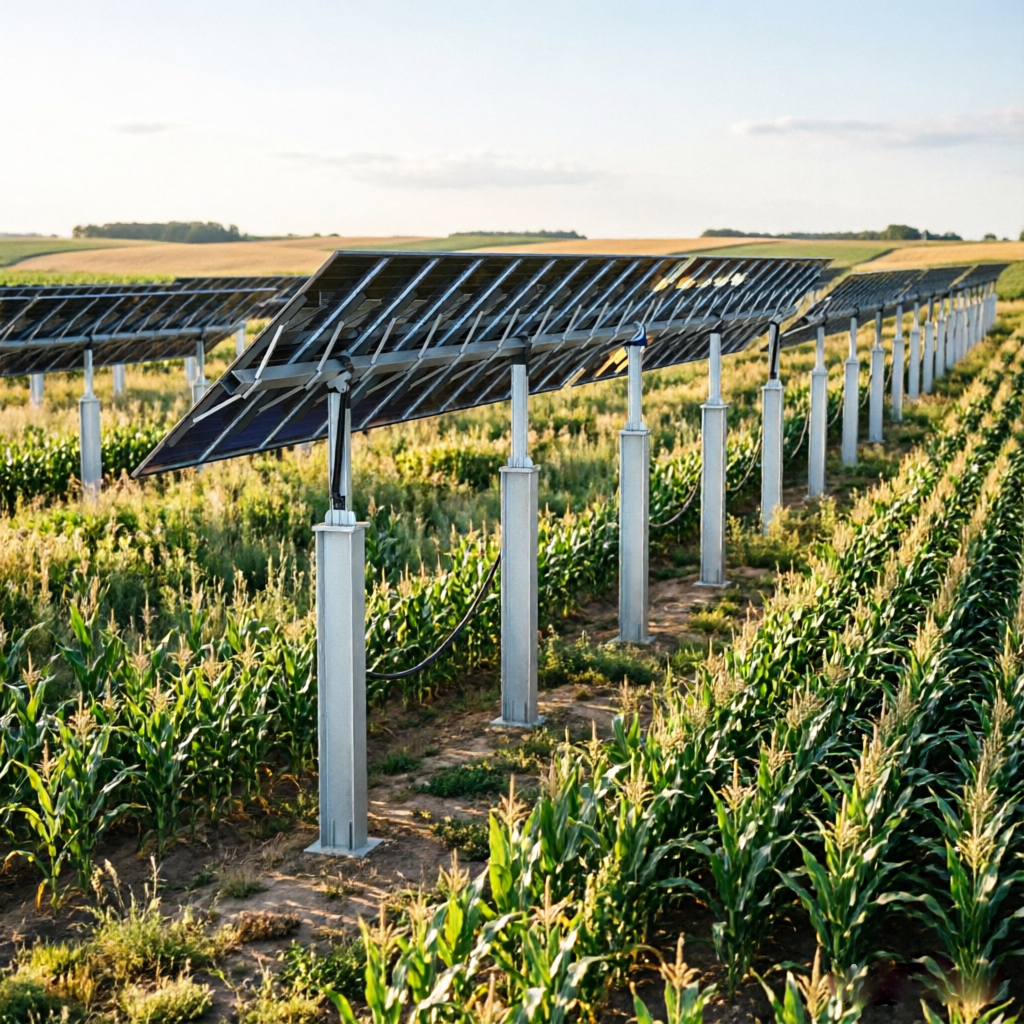
The number one rule for farm solar is clearance. You don’t want a wall of glass blocking your path. Good agricultural trackers are built tall—we’re talking legs that lift the panels 2.5 meters (about 8 feet) or more off the ground.
Why does this matter? Simple. It means you can drive your tractors, seeders, and harvesters right under the array without holding your breath. You keep your ability to fully mechanize your farm, so planting and harvesting go on just like normal. The solar setup stays out of your way.
- Panels That Spin 90° Vertical to Get Out of the Way
This is a cool feature that changes the game. Top-tier agricultural trackers can rotate the panels all the way to a 90° vertical position, standing them up straight like a fence.
Here’s why that’s awesome:
- Let the Light In: When your crops are craving sunlight, you can stand the panels up vertically. This minimizes shadows and lets rain and sun hit the soil evenly.
- Easier Driving: When the panels are standing straight up, they take up less space, making it even easier to navigate equipment between the rows.
- Instant Shade: On the flip side, if it’s a scorching hot day, you can angle them back down to shield delicate plants from getting fried—all while still making electricity.
- Tough Enough to Handle a Good Gust of Wind
Since these trackers are taller than your average setup, they catch more wind. That’s why they need to be built like tanks. We’re talking high-strength galvanized steel and super rigid designs.
You don’t want your investment wobbling around in a breeze. Reliable trackers come with serious specs:
- Handling Daily Wind: They keep working smoothly even when it’s blustery (usually up to 18m/s).
- Surviving Storms: If a really bad storm rolls in (gusts over 22m/s), the system automatically tilts into a “survival position” to let the wind pass through safely.
- Rust Protection: Since farms can be humid and muddy, they’re treated to resist corrosion so you aren’t fixing rust spots every year.
Wrapping It Up
At the end of the day, picking the right solar tracker for agriculture isn’t just about going green—it’s about being smart with your land. By going for a system with enough height for your solar tractors, panels that can stand up vertically, and a sturdy build that laughs at the wind, you get the best of both worlds.
It’s a solid way to diversify your income without sacrificing your harvest. Ready to put your land to work?