



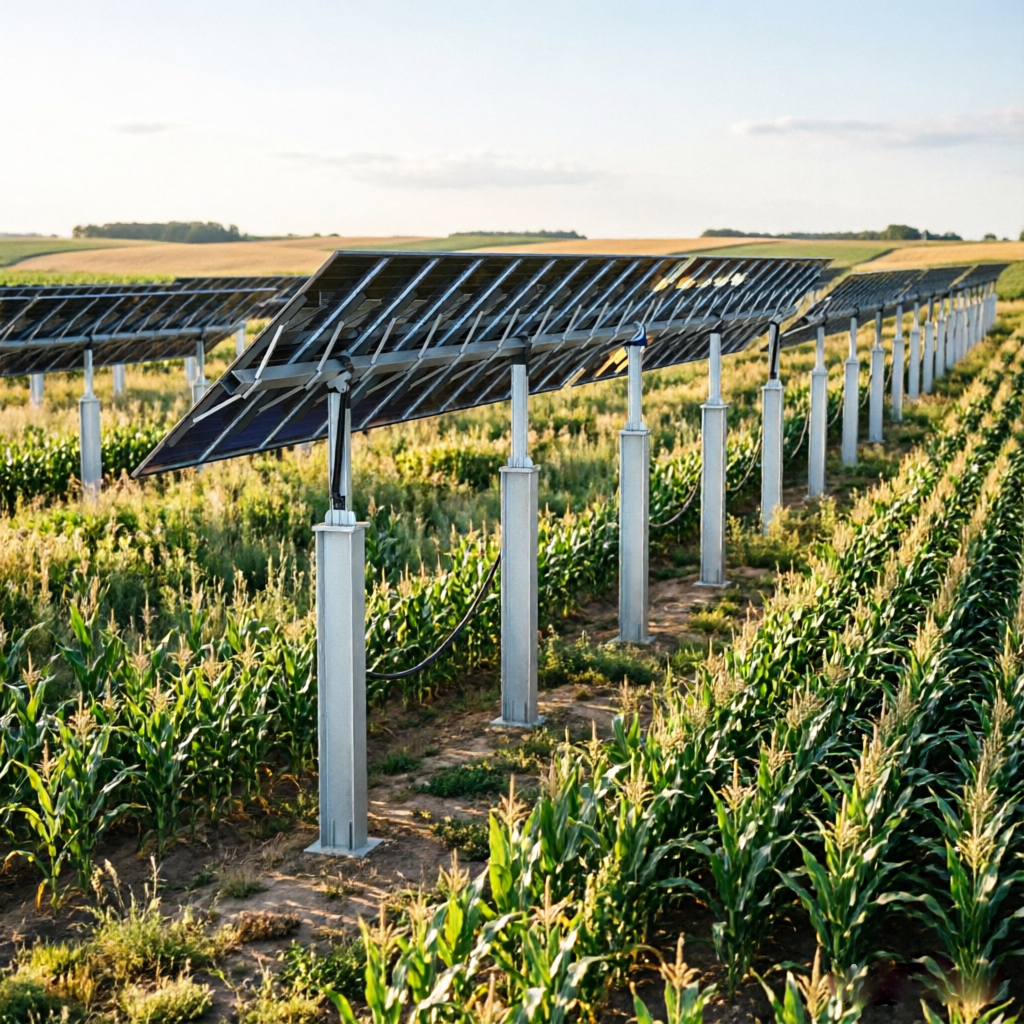
Solar Tracker Backtracking: Maximizing Energy Yield Without Shadows
When optimizing a solar power plant, maximizing the efficiency of each panel is only half the battle. The other half is ensuring that the entire array works harmoniously. This is where the solar tracker backtracking mechanism becomes an indispensable tool. While a standard tracking algorithm aims to keep panels perfectly perpendicular to the sun, backtracking intelligently adjusts the angle to prevent inter-row shading, ultimately boosting the overall energy yield of the system.
The Shading Dilemma in Single-Axis Systems
Single-axis solar tracker systems are highly effective at capturing solar irradiance, especially during the early morning and late afternoon when the sun is low on the horizon. However, this precision comes with a catch. When panels tilt aggressively to face the rising or setting sun, the front rows can cast shadows on the rear rows.
Shading is not merely a minor inconvenience; it is a severe bottleneck for solar arrays. Because solar panels are typically wired in series, a shadow on a single panel can drastically reduce the current output of the entire string. Furthermore, shaded cells can act as resistors, leading to “hot spots” that degrade the equipment over time. In these low-sun scenarios, the energy lost to shading often exceeds the energy gained by perfect perpendicular alignment.
How Backtracking Works
Backtracking is an advanced control algorithm designed specifically to solve this geometric conflict. Instead of blindly following the sun’s azimuth, the solar tracker controller calculates the critical angle at which inter-row shading would begin.
When the sun drops below this threshold, the tracker actively “backtracks” or reverses its rotation. It tilts the panels slightly back toward a horizontal position, creating enough clearance between the rows to keep the rear panels completely illuminated. The system essentially trades a small amount of direct irradiance on the front panels to prevent a massive loss of generation on the shaded rear panels. The result is a net positive increase in total plant output.
Smart Control Strategies for Modern Trackers
Modern solar tracker systems do not rely on simple open-loop calculations alone. Advanced implementations utilize hybrid tracking strategies that combine solar movement models with dynamic feedback controllers. This ensures high-accuracy tracking without requiring precise geographical calibration during installation.
Furthermore, intelligent backtracking algorithms factor in energy-saving metrics. Rather than tracking with maximum mechanical precision at all times, the system modulates its accuracy based on the sun’s position to prevent unnecessary motor wear and energy overconsumption. This balance of mechanical efficiency and optical optimization is what makes modern tracking systems both highly profitable and durable.
The Bottom Line for Solar Investors
For anyone investing in or managing a solar array, understanding backtracking is crucial. It transforms a solar tracker from a simple mechanical mover into an intelligent energy optimizer. By eliminating morning and evening shading losses, backtracking ensures that your solar investment operates at peak capacity from dawn to dusk, safely and efficiently.