
How to Prevent Sunlight Shading Between Two Rows of Solar Panels
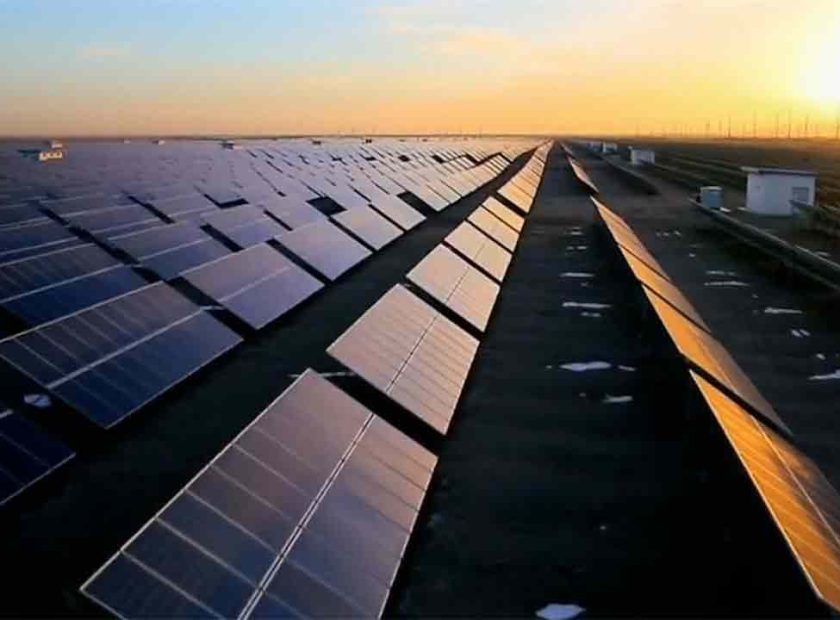
When designing a solar power system, maximizing energy output is the ultimate goal. One of the most common challenges that can significantly reduce system efficiency is sunlight shading. When one row of solar panels casts a shadow on the row behind it, the shaded panels can experience a dramatic drop in power generation and even suffer from long-term damage like hot spots. Fortunately, there are highly effective strategies to prevent this issue. Whether you are using a fixed-tilt system or a solar tracker, understanding how to manage spacing and tracking behavior is essential for optimal performance.
In this article, we will explore two primary solutions to avoid shading between two rows of solar panels: calculating the minimum spacing and utilizing a solar tracker with backtracking functionality.
Solution 1: Determine the Minimum Spacing Between Rows
The most fundamental way to prevent shading is to ensure there is adequate physical distance between your solar panel rows. The required spacing depends heavily on your geographic location, the tilt angle of the panels, and the height of the array.
Key Factors in Spacing Calculation:
- Geographic Latitude: The sun sits lower in the sky at higher latitudes, creating longer shadows. Therefore, installations in northern or southern regions require wider spacing compared to those near the equator.
- Panel Height and Tilt Angle: The vertical height of the tilted panel array directly dictates the shadow length. A steeper tilt angle increases the vertical height, which in turn requires a greater distance between rows.
- Critical Sun Angles: Industry best practices typically recommend spacing panels so that no shading occurs during the peak solar hours (usually between 9:00 AM and 3:00 PM) on the winter solstice, when shadows are at their longest.
How to Calculate Minimum Distance:
A quick estimation formula often used in the industry is D = H × K, where:
- D is the minimum horizontal distance between the bottom of the front row and the top of the back row.
- H is the vertical height of the tilted panel.
- K is a latitude coefficient (e.g., 1.2–1.4 for low latitudes, 1.3–1.5 for mid-latitudes, and 1.5–1.7 for high latitudes).
For large-scale commercial projects, it is highly recommended to use professional solar design software (such as PVsyst or Solargis). These tools use precise astronomical data to calculate exact shadow lengths throughout the year, ensuring your layout is perfectly optimized without wasting valuable land.
Solution 2: Utilize a Solar Tracker with Backtracking Functionality
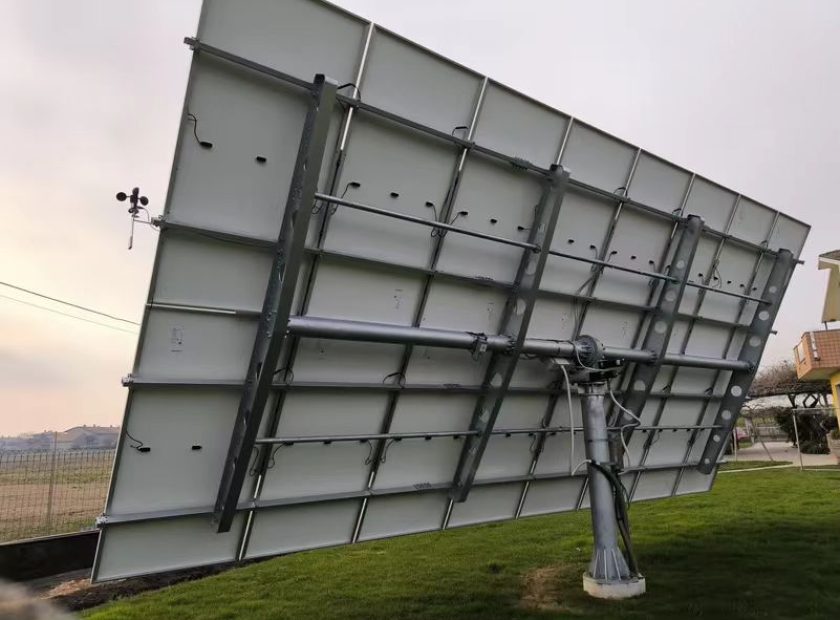
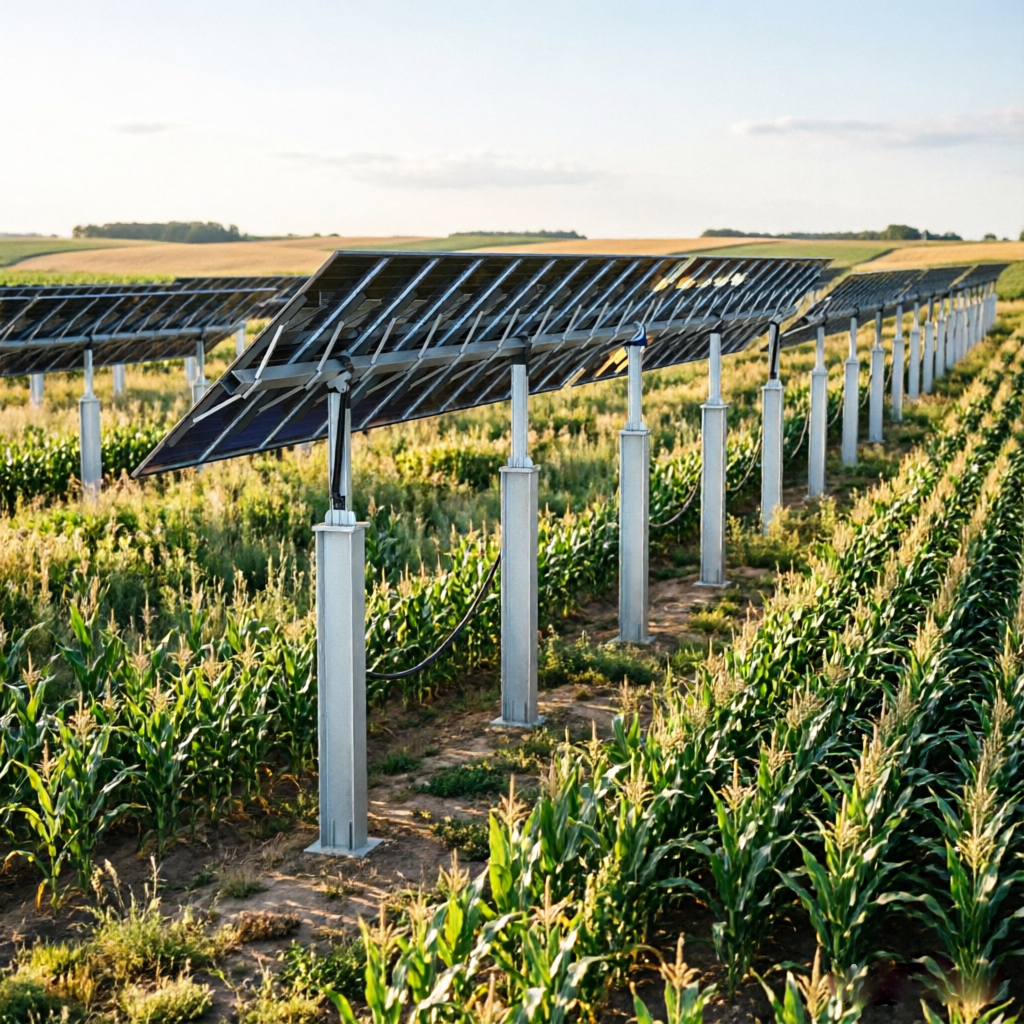
If you are using a solar tracker to follow the sun’s path across the sky, shading becomes a dynamic issue. As the tracker tilts toward the east in the morning or west in the evening, the risk of inter-row shading increases significantly. This is where advanced tracking controllers with backtracking capabilities become a game-changer.
What is Backtracking?
Backtracking is an intelligent control strategy used in single-axis solar tracker systems. When the sun is low on the horizon and the tracker’s normal angle would cause the front row to cast a shadow on the back row, the controller automatically adjusts (or “backtracks”) the tilt angle. Instead of pointing directly at the sun, the panels rotate slightly backward to eliminate the shadow entirely.
Benefits of Backtracking:
- Eliminates Electrical Shading Losses: Partial shading on series-connected panels can disproportionately destroy the output of an entire string. Backtracking prevents this severe electrical mismatch.
- Allows Closer Row Spacing: By avoiding direct beam shading, backtracking allows you to install rows closer together. This increases the ground cover ratio (GCR), reducing land acquisition and site preparation costs.
- Increases Overall Energy Yield: Studies show that a solar tracker utilizing backtracking actually collects more usable solar energy than a conventional tracker that suffers from shading losses during early morning and late afternoon hours.
It is important to note that while backtracking introduces a slight cosine loss (since the panel is no longer perfectly perpendicular to the sun), this minor reduction in direct irradiance is vastly outweighed by the prevention of severe shading losses.
Conclusion
Preventing sunlight shading between two rows of solar panels is critical for protecting your investment and maximizing ROI. For fixed-tilt systems, meticulous calculation of the minimum spacing based on latitude and tilt angle is non-negotiable. For dynamic systems, investing in a high-quality solar tracker equipped with backtracking technology is the most efficient way to maintain unshaded, high-yield performance throughout the day. By combining smart layout design with advanced tracking algorithms, you can ensure your solar installation operates at peak efficiency year-round.