


Can Solar on the Car Solve Range Anxiety? A 2026 Reality Check
Range anxiety remains the number one barrier holding drivers back from switching to electric vehicles. What if your car could charge itself just by sitting in the sun? The idea of putting solar on the car is no longer science fiction — but can it actually eliminate the fear of running out of battery? Let’s break down what the technology delivers today and where it’s headed.
What Does “Solar on the Car” Actually Mean?
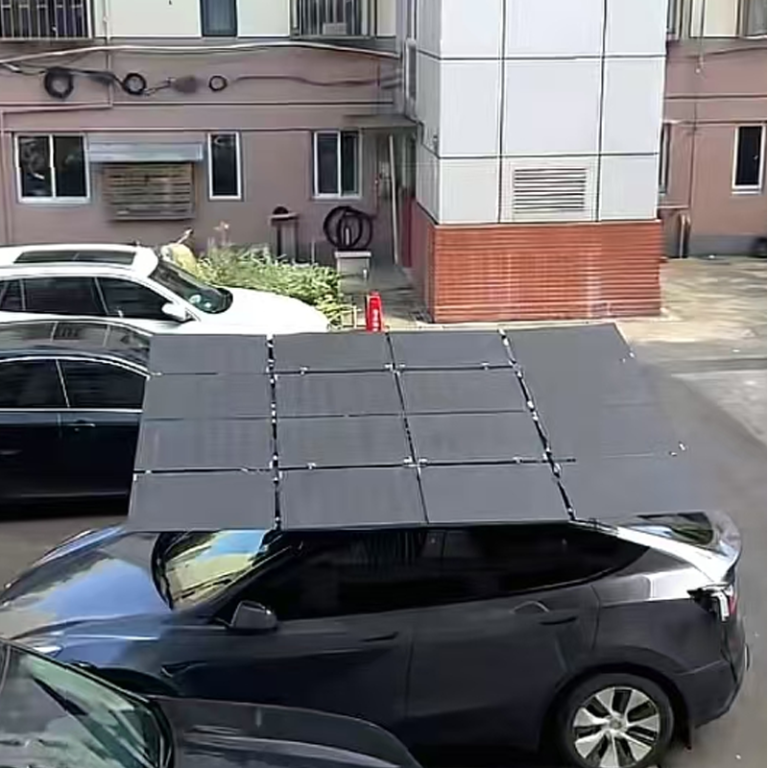
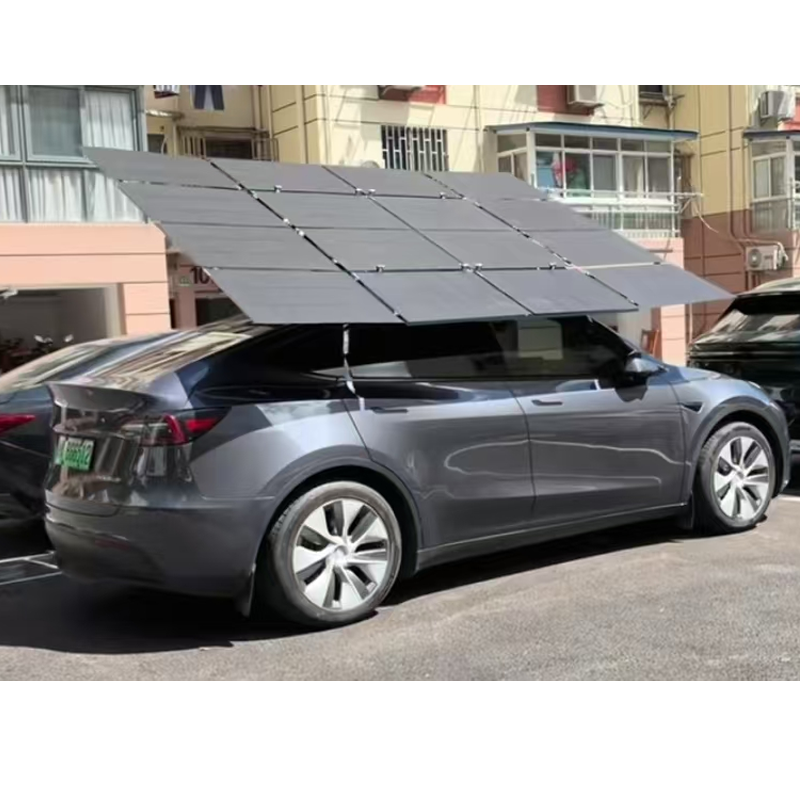
Solar on the car refers to photovoltaic (PV) panels integrated into a vehicle’s body — most commonly the roof, hood, or trunk. This technology is known in the industry as Vehicle-Integrated Photovoltaics (VIPV). Unlike bolting a rooftop solar rack onto your garage, VIPV uses lightweight, flexible, and often curved solar cells that are built directly into the car’s surface.
A typical passenger car offers roughly 1.5 to 2 square meters of usable roof area. With current commercial solar cell efficiency ranging from 20% to 25%, that translates to a peak output of approximately 300 to 500 watts under ideal conditions — enough to trickle-charge the battery whenever the car is parked or driving outdoors.
How Much Range Can Solar on the Car Really Add?
This is the question every EV buyer wants answered. Here are the real-world numbers:
- Daily energy generation: Under good sunlight, a roof-mounted solar array can produce roughly 1 to 3 kWh per day. In sunnier climates with full-body PV coverage, studies show this can reach up to 6 kWh per day.
- Extra driving range: That equates to approximately 5 to 30 miles (8 to 50 km) of added range per day, depending on the vehicle’s energy efficiency and local weather conditions.
- Annual contribution: The International Energy Agency’s PV Power Systems Programme (IEA-PVPS) estimates that an efficient solar-equipped EV could travel up to 4,500 km (about 2,800 miles) per year on solar power alone.
To put this in perspective, if your daily commute is under 30 km (19 miles), solar on the car could theoretically cover a significant portion — or even all — of your daily driving needs. For longer commutes and road trips, it serves as a meaningful supplement rather than a complete solution.
Which Car Models Already Offer Solar on the Car?
Several automakers have moved from concept to production:
- Hyundai Ioniq 5 / Sonata Hybrid: Hyundai’s solar roof system can recover 30% to 60% of battery charge per day with six hours of sunlight exposure, adding roughly 2 to 4 miles of range daily.
- Lightyear 0 (Netherlands): Designed from the ground up as a solar EV, it features 5 square meters of solar panels and achieves up to 70 km (43 miles) of range per day from solar alone. The company’s technology is now being licensed to other manufacturers.
- BYD (China): In 2025, BYD introduced an optional solar roof module on models like the Han DM-i and Qin PLUS DM-i, using heterojunction (HJT) cells with 23.18% efficiency and a sliding mechanism that expands the collection area by 60% when parked.
- Fuyao Solar Sunroof (2026): Fuyao Glass — the world’s largest automotive glass supplier — launched a solar-integrated sunroof that generates electricity even while parked, powering cabin ventilation and reducing interior heat buildup.
Solar on the Car vs. Traditional Charging: A Practical Comparison
| Factor | Solar on the Car | Home / Public Charging |
| Daily range added | 5–30 miles (8–50 km) | Unlimited (based on charging time) |
| Charging speed | Slow trickle charge | Fast (Level 2 or DC fast charge) |
| Cost after installation | Free (sunlight) | $0.10–$0.35 per kWh (varies) |
| Works while parked | Yes (outdoors only) | Yes (plugged in) |
| Weather dependent | Yes | No |
| Infrastructure needed | None | Home charger or public station |
The comparison makes it clear: solar on the car is not a replacement for plug-in charging — it’s a powerful complement. Think of it as a “range extender” that works silently in the background, every day, for free.
The Case for Solar on the Car: Where It Shines
- Killing Range Anxiety on Short Commutes
For the majority of drivers who travel less than 50 km per day, roof-mounted solar can provide enough energy to meaningfully extend the time between full charges. In sunny regions, you might go weeks without plugging in for your daily commute.
- Preventing Battery Drain While Parked
EVs lose a small amount of charge while parked due to vampire drain (battery management systems, climate pre-conditioning, etc.). Solar on the car offsets this loss, ensuring your vehicle is always ready to go.
- Cabin Climate Management
The latest solar sunroof systems — like Fuyao’s 2026 model — use harvested solar energy to run ventilation fans while the car is parked in the sun. This keeps the cabin cooler and reduces the energy needed for air conditioning when you return.
- Emergency Backup Range
If you’re caught with a near-empty battery and no charging station in sight, even a few extra miles from solar could be the difference between reaching safety and being stranded.
- Environmental Impact
Solar-powered driving can reduce EV emissions by 60% to 90% compared to grid charging, depending on how clean your local electricity supply is. In regions where the grid still relies heavily on fossil fuels, solar on the car makes your EV genuinely greener.
Current Limitations and Challenges
Despite the promise, several hurdles remain:
- Limited surface area: A car roof can only fit so many solar cells. Even with full-body coverage, the total wattage is a fraction of what a home rooftop solar system produces.
- Efficiency vs. cost trade-off: High-efficiency multi-junction solar cells (34%+ efficiency) exist but are prohibitively expensive for mass-market vehicles. Standard automotive-grade cells hover around 20–23%.
- Curved surfaces reduce output: Car bodies are not flat. Research from Fraunhofer ISE shows that curvature and partial shading can reduce energy harvest by 15% to 30% compared to a flat, optimally angled panel.
- Weather and geography: Solar output drops significantly on cloudy days, in winter months, and at higher latitudes. A car in Phoenix, Arizona, will harvest far more solar energy than one in Seattle or London.
- Added cost: Solar roof options typically add $1,000 to $3,000 to a vehicle’s price. Whether this pays for itself depends on your driving habits, local electricity rates, and how much sun you get.
What’s Next for Solar on the Car?
The technology is advancing rapidly. Key developments to watch:
- Perovskite solar cells: These next-generation cells are thinner, lighter, more flexible, and perform better under low-light conditions — making them ideal for automotive use. Conversion efficiency has been climbing quickly in lab settings.
- Expandable solar roofs: BYD’s sliding roof design, which increases collection area by 60% when parked, could become a mainstream feature across more models.
- Full-body PV integration: Researchers at imec/EnergyVille are developing solar cells that can be applied to hoods, trunks, and doors — not just the roof — potentially doubling or tripling energy harvest.
- Market growth: The global vehicle-integrated solar panel market was valued at $652.4 million in 2024 and is projected to grow at a CAGR of 11.9% through 2034, according to Global Market Insights.
So, Can Solar on the Car Eliminate Range Anxiety?
The short answer: Not completely — but it can significantly reduce it.
For short-distance commuters, solar on the car can cover a substantial portion of daily driving, reducing the frequency of plug-in charging from daily to weekly. For long-distance drivers, it acts as a passive range booster that adds a safety buffer and offsets vampire drain.
As solar cell efficiency improves and costs decline, the contribution of on-board solar will only grow. The technology is already moving from niche to mainstream, backed by major automakers and a rapidly expanding supply chain.
Solar on the car won’t replace charging stations — but it might just change how often you need to visit one.
Frequently Asked Questions
Q: How much does it cost to add solar panels to a car?
A: Factory-installed solar roof options typically add $1,000–$3,000 to the vehicle price. Aftermarket kits are available but vary widely in quality and compatibility.
Q: Can I install solar panels on my existing EV?
A: Some aftermarket solar kits are available, but professional installation is recommended. Compatibility with your EV’s battery management system is critical.
Q: Does solar on the car work on cloudy days?
A: Yes, but output is significantly reduced — typically to 10–25% of the rated capacity. Modern solar cells still generate some power under diffused light.
Q: How long do car-integrated solar panels last?
A: Most automotive solar systems are designed to last 15–25 years, similar to rooftop solar panels, with minimal degradation over time.
Q: Is solar on the car worth it?
A: If you park outdoors, have a short commute, and live in a sunny region, the return on investment can be meaningful. It also provides intangible benefits like range security and reduced carbon footprint.