
Is a Solar Tracker Still Worth the Investment When Solar Panel Prices Drop?
For over a decade, the golden rule of the solar industry has been simple: wait, and panels will get cheaper. As solar panel prices have indeed plummeted to historic lows, a pressing question has emerged among developers and homeowners: with modules so affordable, is investing in a solar tracker still justified?
The short answer is yes. While cheap panels lower the initial barrier to entry, the solar industry is shifting its focus from minimizing upfront costs to maximizing long-term value. In 2026, a solar tracker is no longer just a premium add-on; it is a critical tool for optimizing Levelized Cost of Energy (LCOE), adapting to dynamic electricity markets, and future-proofing solar assets.
Historically, fixed-tilt systems were favored because they had the lowest initial capital expenditure (CapEx). However, the true measure of a solar project’s success is its LCOE. A solar tracker increases the initial investment by roughly 10% to 20%, but it boosts energy yield by 10% to 30% (and up to 40% in some configurations).
By spreading the fixed costs of land, grid connection, and labor over a significantly larger energy output, trackers effectively drive down the cost per kilowatt-hour. As manufacturing efficiencies for panels plateau, system-level optimizations like tracking are now the primary drivers for reducing LCOE.
The necessity of a solar tracker has been amplified by global electricity market reforms. In many regions, solar power now participates in spot pricing, leading to the “duck curve” phenomenon. During midday, when solar generation peaks, electricity prices often drop to zero or even go negative due to oversupply. Conversely, prices surge during the early morning and late afternoon.
Fixed-tilt systems generate their peak power right when electricity is cheapest. A smart solar tracker, however, can be programmed to prioritize high-value generation. By adjusting the panel angles to capture more sunlight during the morning and evening peak-price windows, trackers transform a standard solar asset into a financially optimized energy generator.
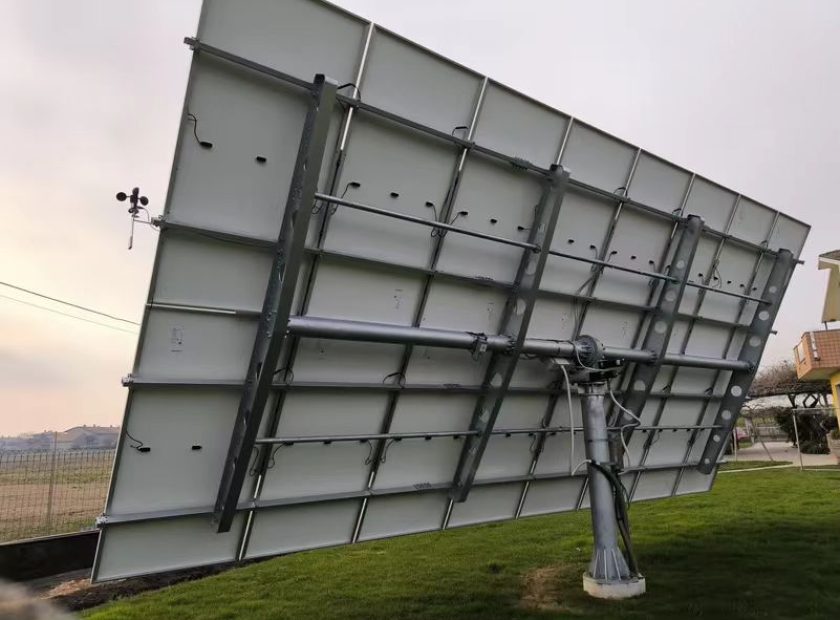
Early generations of tracking systems faced skepticism due to mechanical failures and high maintenance costs in harsh environments. Today, those concerns are largely obsolete. Modern solar tracker systems are equipped with AI-driven algorithms, digital twins, and multi-source sensors.
These intelligent systems do more than just follow the sun; they predict extreme weather and automatically shift panels into a stow position to withstand high winds or heavy snow. Furthermore, advanced anti-soiling designs and durable bearings ensure a 25-year lifespan with minimal O&M requirements, making the long-term ROI highly predictable.
While panel prices have been low, the era of endless price drops may be pausing. Starting April 1, 2026, China is set to abolish export tax rebates for photovoltaic products. Combined with rising silver prices and tightening supply chains, experts predict solar module prices could rise by 10% to 15% in the coming months.
This impending price correction makes the value proposition of a solar tracker even stronger. If the baseline cost of solar panels increases, the relative premium of adding a tracking system shrinks. Locking in a tracker-integrated system now not only secures current pricing but also guarantees higher energy yields when hardware costs eventually stabilize at a higher baseline.
The decision to install a solar tracker should no longer be viewed through the narrow lens of upfront hardware costs. In an era of market-based electricity pricing, tightening supply chains, and a focus on lifecycle profitability, trackers are essential.
Whether you are developing a utility-scale solar farm or planning a commercial installation, integrating a solar tracker ensures that your project doesn’t just generate power, but generates maximum financial value. As the solar industry matures, the winners will be those who optimize their entire system, not just those who buy the cheapest panels.